No products in the basket.
Free delivery for orders over R1000
Pearl powder has been valued for centuries in traditional beauty and wellness rituals. Today, it is available in different forms, and one of the most common questions we receive is:
What is the difference between hydrolyzed pearl powder and micronized pearl powder?
At Pearl Powder South Africa, both options are made from freshwater cultured pearls (farmed and created using freshwater mussels). Both are food-grade, purity-tested, and supplied with quality documentation (like a Certificate of Analysis). The main difference is not the source of the pearl. The main difference is how the pearl powder has been processed and how you want to use it.
In simple terms:

All our pearl powder is derived from freshwater pearls, not seawater pearls.
Freshwater pearl powder is naturally rich in calcium carbonate, trace minerals, amino acids, and pearl-derived proteins. It has been traditionally used both internally and topically as part of beauty, mineral support, and holistic wellness routines.
Both our hydrolyzed and micronized pearl powders are:
The best option depends on your intended use.
Hydrolyzed pearl powder is freshwater pearl powder that has been processed to make it more water-soluble.
This makes it the best starting point for most people who want a smoother, easier-mixing pearl powder for daily use. It dissolves best in warm or hot water and may take longer to dissolve in cold liquids.
Hydrolyzed pearl powder is our recommended choice for most customers because it is easy to use and blends beautifully into everyday drinks and water-based beauty preparations.
Hydrolyzed pearl powder is best for:
Micronized pearl powder is whole freshwater pearl powder that has been mechanically milled into an ultra-fine powder.
Unlike hydrolyzed pearl powder, it is not fully water-soluble. It can be stirred into drinks, smoothies, or foods, but some natural texture or settling may remain. This is completely normal.
Micronized pearl powder is best for traditional DIY applications, especially where the powder is blended into oils, pastes, masks, toothpaste, or capsules.
Micronized pearl powder is best for:
| Feature | Hydrolyzed Freshwater Pearl Powder | Micronized Freshwater Pearl Powder |
|---|---|---|
| What it is | Freshwater pearl powder processed to become more water-soluble. | Whole freshwater pearl powder mechanically milled into an ultra-fine powder. |
| Best described as | Water-soluble, easy-mixing, and beverage-friendly. | Whole-pearl, ultra-fine, mineral-rich, and traditional. |
| Water solubility | Water-soluble. Dissolves best in warm or hot water. | Not fully water-soluble. May settle in drinks. |
| Oil compatibility | Not the preferred choice for oil-based blends. | Best choice for oil-based blends such as castor oil. |
| Best internal uses | Warm water, tea, coffee, cacao, smoothies, and beverages where smoother mixing is preferred. | Capsules, smoothies, yogurt, food, cacao, or drinks where a slight texture is acceptable. |
| Best topical uses | Water-based masks, facial washes, creams, lotions, serums, toners, and mists. | Castor oil blends, toothpaste, masks, balms, salves, pastes, and setting powder. |
| Texture | Smooth and easy to disperse when dissolved properly. | Fine and silky, but remains a suspended powder rather than fully dissolving. |
| Best for most people? | Yes. Recommended as the best starting point for most daily users. | Best for specific DIY, oil-based, and traditional uses. |
For most customers, we recommend starting with Hydrolyzed Freshwater Pearl Powder.
It is the easiest option for daily use because it mixes well into warm drinks and works beautifully in water-based beauty rituals.
Choose Micronized Freshwater Pearl Powder if your main goal is to make oil-based blends, toothpaste, masks, capsules, or traditional DIY preparations.
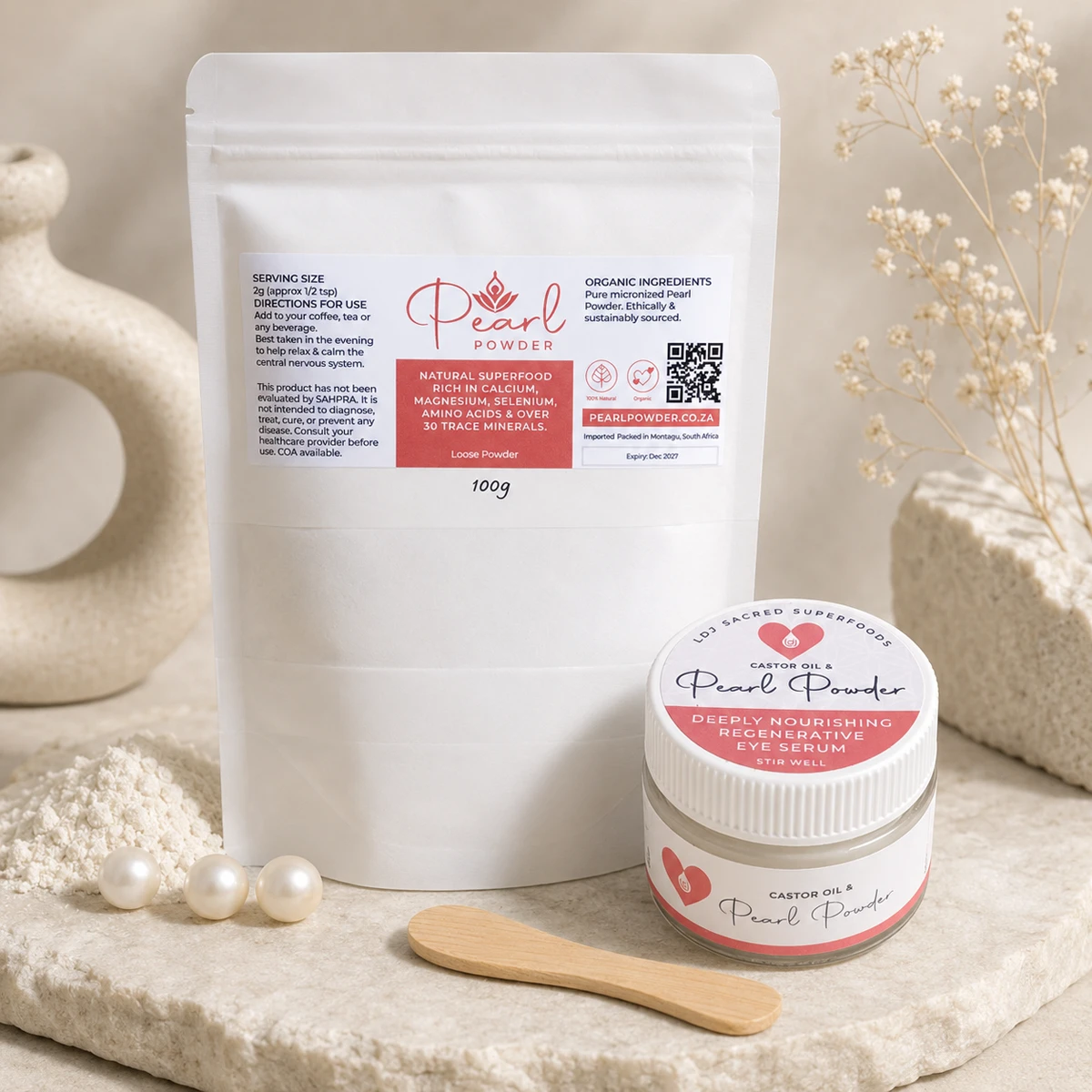
This bundle is best for those who want a simple daily ritual.
It includes:
This gives you hydrolyzed pearl powder for internal and water-based use, plus the ready-made micronized pearl powder serum for your topical oil-based ritual.
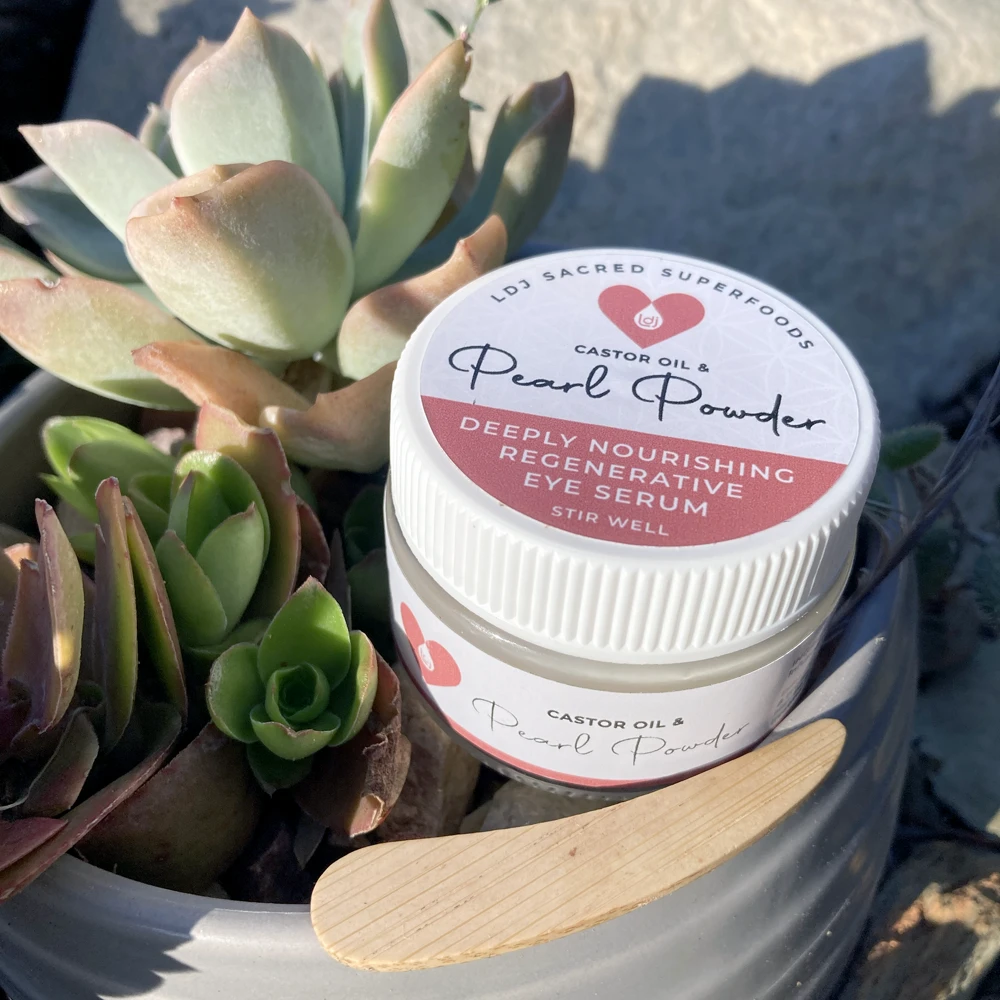
This is the easiest option. The serum is already blended with micronized pearl powder and organic cold-pressed, hexane-free castor oil.
It comes ready to use and is ideal if you do not want to mix your own.
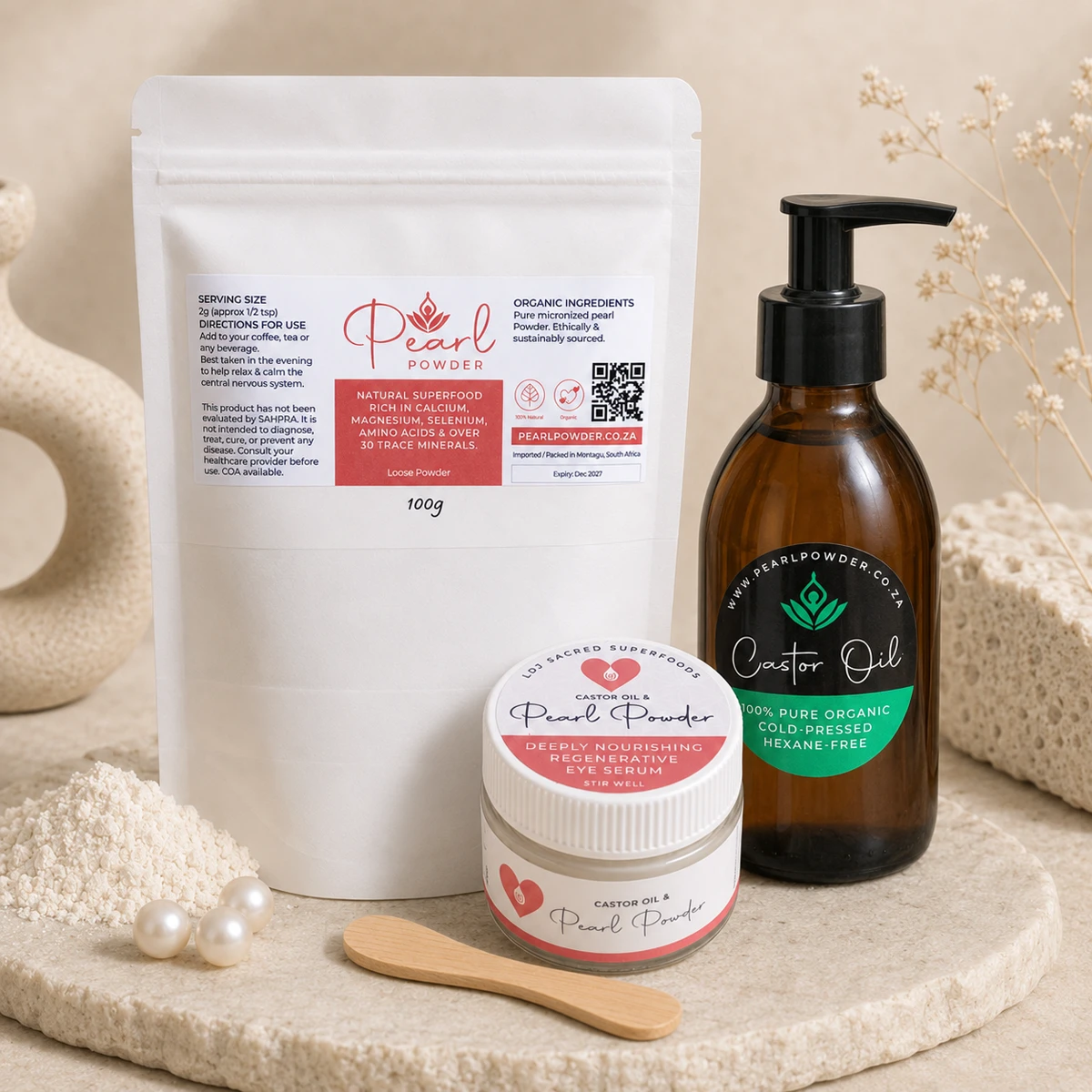
This bundle is ideal if you want the ready-made serum jar, plus the ingredients to refill it yourself.
The bundle includes:
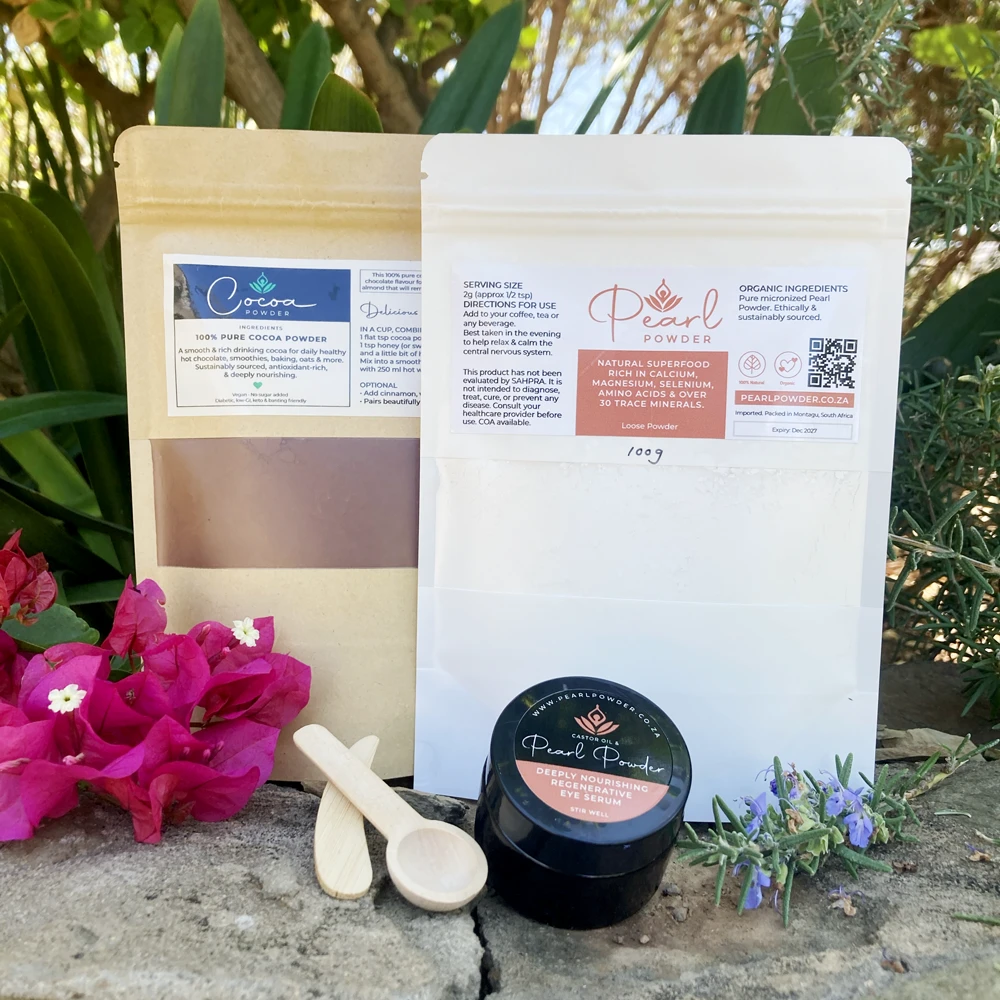
This bundle is best for a complete inner and outer beauty ritual.
It includes:
This is a beautiful daily ritual kit for warm drinks, mineral support, skin nourishment, and a grounding evening routine.
| Choose Hydrolyzed Freshwater Pearl Powder if you want to: | Choose Micronized Freshwater Pearl Powder if you want to: |
|---|---|
| Drink pearl powder daily. | Mix pearl powder with castor oil. |
| Mix it into warm water, tea, coffee, cacao, or smoothies. | Make your own eye-area serum. |
| Use it in water-based skincare. | Make toothpaste or tooth powder. |
| Choose the easiest option for daily use. | Create DIY face masks, balms, or pastes. |
| Start with the most beginner-friendly pearl powder. | Use a traditional whole-pearl powder. |
Both hydrolyzed and micronized pearl powder are pure, food-grade, purity-tested freshwater pearl powders.
The difference is in how they behave.
If you are still unsure which one to choose, start with hydrolyzed pearl powder for your daily ritual and add the pre-mixed Pearl Powder & Castor Oil Serum if you want the oil-based topical ritual too.
We supply pearl powder directly to customers, holistic practitioners, resellers, and those formulating their own beauty, skincare, and wellness products.
If you would like to buy in bulk, resell our products, create your own formulations, or need guidance on choosing between hydrolyzed and micronized pearl powder, please reach out to us. We are happy to guide you toward the most suitable pearl powder for your intended use.
Our pearl powder is freshwater pearl powder.
Yes. Both hydrolyzed and micronized pearl powder are food-grade and suitable for internal use when used appropriately.
Yes. Both can be used topically, but they behave differently.
Hydrolyzed pearl powder is best for water-based topical applications such as facial washes, warm-water pastes, moisturizers, lotions, serums, toners, and mists.
Micronized pearl powder is best for oil-based or paste-based topical applications such as castor oil blends, coconut oil toothpaste, balms, masks, and traditional DIY beauty rituals.
Yes. Our pearl powders are batch-tested and supported by Certificate of Analysis documentation for quality and purity.
Hydrolyzed Freshwater Pearl Powder is recommended for most people because it is water-soluble and easy to use in warm drinks and water-based beauty rituals.
Micronized Freshwater Pearl Powder is best for castor oil blends because it is more suitable for oil-based preparations.
Hydrolyzed pearl powder is not the preferred option for castor oil. For oil-based blends, we recommend micronized pearl powder or our ready-made Pearl Powder & Castor Oil Serum.
Yes. Micronized pearl powder can be taken internally, but it does not fully dissolve in water. It is best used in capsules, smoothies, cacao, yogurt, or food where a slight texture is acceptable.
Yes. Hydrolyzed pearl powder is ideal for water-based skincare preparations such as facial washes, warm-water pastes, moisturizers, lotions, serums, toners, and facial mists.
For most people, we recommend starting with Hydrolyzed Freshwater Pearl Powder. If you also want the castor oil eye-area ritual, add the Pearl Powder & Castor Oil Serum.
Pearl powder has a long history of use in Traditional Chinese Medicine and Ayurvedic traditions, where it has been valued as an ancient natural medicine, beauty tonic, and mineral-rich support for the body.
It is traditionally associated with nourishment for the eyes, skin, hair, nails, bones, and overall inner vitality. Many people also value pearl powder for its more subtle qualities of calm, clarity, luminosity, and insight. However, our pearl powder products are sold as food-grade wellness and beauty products, not as registered medicines. They are not intended to diagnose, treat, cure, or prevent any disease.
Pearl powder is far more than a simple beauty ingredient. It is a naturally occurring, mineral-rich substance made from freshwater pearls and traditionally valued for both internal and topical use.
Pearls naturally contain approximately 91% calcium carbonate, along with magnesium carbonate, silica, selenium, iodine, sodium, copper, iron, zinc, manganese, peptides, amino acids, and conchiolin — a pearl-derived protein associated with collagen support and tissue nourishment.
In traditional wellness systems, pearl powder has been used to support beauty, radiance, calm, clarity, and nourishment for the eyes, skin, hair, nails, and body. Today, many people use pearl powder as part of a holistic wellness and beauty ritual, both internally and topically.
Disclaimer: This product is not intended to diagnose, treat, cure, or prevent any disease. These statements have not been evaluated by SAHPRA.
Those with shellfish allergies, kidney stones, hyperparathyroidism, or calcium-related medical conditions should consult a healthcare provider before use. If you are pregnant, breastfeeding, taking medication, managing a health condition, or unsure whether pearl powder is suitable for you, please consult your healthcare practitioner before use.
For topical use, patch-test before applying more widely. Avoid direct contact with the eyes. Discontinue use if irritation occurs.
Packed and distributed by LDJ Ventures (Pty) Ltd in South Africa in a facility that may contain allergens. Store in a cool, dry place out of direct sunlight.
Please feel free to reach out to us if you have any questions or would like more guidance.
The following sources are provided for readers who would like to explore the traditional and scientific background of pearl powder in more detail. These references are shared for educational purposes and should not be interpreted as medical advice.
We supply pearl powder directly to customers, holistic practitioners, resellers, and those formulating their own beauty, skincare, and wellness products.
If you would like to buy in bulk, resell our products, create your own formulations, or need guidance on choosing between hydrolyzed and micronized pearl powder, please reach out to us. We are happy to guide you toward the most suitable pearl powder for your intended use.


Copyright © 2026 LDJ Ventures (Pty) Ltd T/A Sacred Superfoods | Website by LDJ